












Bug bounty hunting has become a competitive business. Thousands of security researchers, automated scanners, and AI-powered tools are searching for vulnerabilities across the same applications. Yet organizations continue to pay millions of dollars for security discoveries, while AI agents and interconnected software systems create entirely new risks.
For an independent developer, the obvious question is whether meaningful opportunities still exist in an increasingly crowded market.
The answer is more interesting than a simple yes or no. Bug bounty hunting is changing, and the knowledge required to identify valuable vulnerabilities is expanding beyond traditional penetration testing.
Developers who understand PHP, APIs, software architecture, authentication, and business workflows may possess skills that automated security scanners cannot easily replicate.
The Bug Bounty Economy: Millions in Rewards, Thousands of Competitors
According to the HackerOne 2026 Security Research Report, organizations paid substantial rewards to independent security researchers between July 2025 and June 2026.
$89.1 MILLION
Bug bounty payments distributed through HackerOne between July 2025 and June 2026.
The report draws on 92,194 valid vulnerability reports, illustrating the scale of modern coordinated security research.
However, those figures do not represent the average income of a bug bounty researcher. Payments are not distributed equally, and an accepted discovery may require substantial investigation.
A researcher might spend several days examining an application only to discover that the vulnerability has already been reported. Another finding may fall outside the program’s authorized scope or fail to satisfy its severity requirements.
Unlike conventional freelance development, where compensation is generally associated with an agreed deliverable, bug bounty programs usually pay for accepted security findings rather than research time.
A Growing Security Backlog
Another figure from HackerOne’s 2026 report illustrates how rapidly vulnerability management is evolving.
+131%
Increase in open valid vulnerability reports between 2024 and 2026.
This growth does not mean that all vulnerabilities remain unresolved indefinitely. In fact, HackerOne reports that average resolution time for critical vulnerabilities improved significantly during the same period.
However, it reinforces the idea that modern organizations face a growing volume of security findings requiring validation, prioritization, and remediation.
For researchers, the opportunity is not necessarily to produce more reports. It is to identify vulnerabilities that provide clear, demonstrable security value.
Why Traditional Vulnerability Hunting Is Becoming More Difficult
Security testing tools have become increasingly accessible.
Developers can analyze HTTP traffic, examine application endpoints, inspect dependencies, review source code, and automate many repetitive testing operations.
Artificial intelligence is accelerating several of these activities.
As a result, some common vulnerabilities are increasingly likely to be discovered by multiple researchers using similar techniques.
The competition is particularly intense when thousands of participants investigate the same widely advertised targets.
However, automation has a fundamental limitation: identifying suspicious technical behavior is not always equivalent to understanding its consequences.
The most valuable discovery may not come from a better scanner, but from a better understanding of how an application is supposed to work.
This distinction creates an opportunity for experienced software developers.
1. Business Logic Vulnerabilities: Where Developers Have an Advantage
Business logic vulnerabilities are often difficult to identify because they depend on the functional rules of an individual application.
Consider a fictional SaaS application with three roles: administrator, manager, and reader.
Administrators manage subscriptions and account permissions. Managers can modify project documents. Readers can only access information explicitly shared with them.
The user interface might correctly hide administrative controls from readers. Yet an underlying API could still expose an operation without sufficiently verifying the requesting user’s permissions.
The application may authenticate the user correctly while authorizing the operation incorrectly.
That difference is crucial.
Similar problems can appear in:
- Subscription upgrades and cancellations.
- Refund and payment approval workflows.
- Multi-tenant customer data isolation.
- Document ownership and sharing permissions.
- Invitation and account delegation systems.
- Administrative operations exposed through APIs.
The OWASP API Security Project documents related classes of vulnerabilities, including Broken Object Level Authorization and Broken Function Level Authorization.
For developers familiar with complex business applications, these issues provide an opportunity to apply architectural reasoning to security research.
2. PHP and WordPress: A Specialized Research Market
For PHP developers, the WordPress ecosystem provides another possible entry point into bug bounty research.
WordPress plugins regularly implement custom REST APIs, authentication mechanisms, administrative interfaces, file management systems, and integrations with external platforms.
Every new feature introduces assumptions about permissions, user identity, and data ownership.
A plugin may correctly verify whether a user is authenticated but fail to determine whether that user is authorized to perform a specific operation.
Developers familiar with WordPress functions such as current_user_can(), REST API permission callbacks, nonces, and object-level authorization can examine these implementations in local environments.
Patchstack: Financial Rewards for WordPress Vulnerabilities
Patchstack operates a specialized bug bounty program focused on WordPress software.
UP TO $33,000
Advertised maximum zero-day reward for exceptional qualifying vulnerabilities under Patchstack’s published conditions.
Patchstack also advertises a minimum monthly bounty pool of $10,000 distributed according to qualifying researcher contributions.
These figures are not guaranteed individual payments. Actual rewards depend on severity, eligibility, deployment scale, authentication requirements, and program rules.
Nevertheless, this ecosystem is particularly relevant for developers who already understand PHP and WordPress internals.
The recommended starting point is local source-code analysis and controlled vulnerability reproduction. Open-source availability does not automatically authorize security testing against third-party production websites.
3. AI Agents: The New Security Frontier
Artificial intelligence introduces another major change in application security.
Traditional web applications typically execute operations defined by developers. AI agents can interpret requests, select tools, access external services, manipulate files, and perform increasingly complex actions on behalf of users.
A coding agent, for example, may read a repository, inspect configuration files, execute commands, and modify application code.
Each capability introduces potential security boundaries.
What happens when an agent reads an untrusted document? Can external instructions influence its actions? Does the agent possess more permissions than its current task requires?
These questions are becoming central to AI security research.
When AI Tools Become Attack Surfaces
In November 2026, French newspaper Les Echos reported on a vulnerability identified by cybersecurity startup Lupin & Holmes involving OpenAI’s Codex.
The full technical impact of the reported discovery cannot be independently established from the limited publicly accessible details. Nevertheless, the case illustrates the growing attention paid to the security of AI-powered development environments.
The broader risks include prompt injection, unauthorized tool usage, excessive permissions, data exposure, and the manipulation of autonomous workflows.
The OWASP GenAI Security Project provides resources for understanding these risks, including those associated with agentic applications.
AI Vulnerability Reports Are Growing Rapidly
+222%
Growth in valid AI-related vulnerability reports over two years, according to HackerOne’s 2026 research.
This growth reflects increasing research activity and reported findings. It does not establish how many undiscovered vulnerabilities remain or guarantee that AI security research will generate higher income.
Still, it suggests an important development: security expertise around AI agents, tool integrations, and permission boundaries is becoming increasingly relevant.
OpenAI Raises Its Bug Bounty Rewards
On November 2, 2026, OpenAI announced an increase in its Security Bug Bounty rewards.
Critical vulnerabilities affecting core products such as ChatGPT, Codex, and the API Platform can qualify for base rewards reaching $30,000.
Exceptional critical vulnerabilities may qualify for higher payments, with additional bonuses available under the program’s conditions.
UP TO $172,000
Potential maximum combined reward for certain exceptional findings under OpenAI’s updated security bounty structure.
These exceptional amounts should not be interpreted as typical payouts. They are intended for discoveries satisfying demanding technical and reporting requirements.
OpenAI also maintains separate reporting paths for conventional security vulnerabilities and certain AI safety or abuse concerns.
4. Software Supply Chains: Security Beyond Application Code
A modern PHP application depends on much more than the code written by its development team.
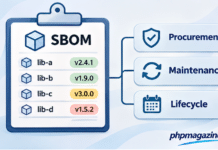
Composer dependencies, Git repositories, CI/CD pipelines, deployment services, container images, and automation platforms all contribute to the application’s security posture.
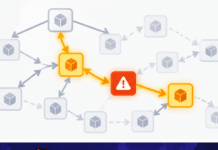
Problems can emerge when one component incorrectly trusts another.
A deployment workflow may expose privileged credentials to an untrusted execution context. A dependency-management process may rely on assumptions about package authenticity. An automation pipeline may inadvertently grant excessive permissions.
Developers with experience in Composer, GitHub Actions, and application deployment already understand many of the systems involved.
Security research in this area requires careful threat modeling and authorized testing, particularly because development infrastructure may be shared across multiple services.
5. SaaS Integrations and API Boundaries
Another interesting research area lies between connected business services.
A SaaS product might rely on an external identity provider, a payment processor, a document storage platform, and several business APIs.
Each component can be secure individually while the overall workflow contains weaknesses.
For example, a customer may cancel a subscription successfully, but the application might fail to revoke access. A change in organizational membership might not propagate correctly to an external service.
These failures involve identity, authorization, state synchronization, and business logic.
They require researchers to understand how interconnected systems are expected to behave, rather than simply inspecting individual endpoints.
Which Specialization Should Developers Choose?
The following comparison offers a practical perspective on the technical expertise required by different research areas.
| Research Area | Relevant Skills | Main Challenge |
|---|---|---|
| Business Logic | Application architecture, permissions, workflows | Understanding functional rules |
| WordPress / PHP | PHP, REST APIs, plugin development | Finding eligible original vulnerabilities |
| AI Agents | LLMs, MCP, tools, authorization | Rapidly evolving security boundaries |
| Supply Chains | Composer, CI/CD, infrastructure | Complex trust relationships |
| SaaS Integrations | APIs, identity management, distributed systems | Cross-system behavior |
No category guarantees better financial returns. The most suitable specialization depends on the researcher’s experience, available programs, and ability to identify valid vulnerabilities.
The Economics: What Does Bug Bounty Research Really Pay?
The largest advertised rewards attract attention, but they say little about the typical financial experience of independent researchers.
Consider a hypothetical developer who spends 40 hours investigating a security program and receives one accepted bounty worth $500.
$12.50 PER HOUR
Illustrative gross return from a $500 reward earned after 40 hours of research.
If the same developer then spends another 40 hours without receiving a bounty, the average across both periods falls to $6.25 per hour.
These numbers are hypothetical, not industry averages. They illustrate why realistic research economics must account for unsuccessful investigations, duplicate findings, report preparation, and learning time.
Successful specialization may improve efficiency, but it cannot eliminate financial uncertainty.
How to Start Legally and Professionally
Bug bounty research should begin with explicit authorization and a clear understanding of program rules.
A publicly accessible website is not automatically a permitted testing target. Even when an organization operates a security disclosure program, only designated systems and testing methods may be allowed.
Step 1 — Build the Foundation
Use educational resources such as PortSwigger Web Security Academy and OWASP Juice Shop to understand common web vulnerabilities in controlled environments.
Step 2 — Specialize in Familiar Technology
Start with an area where existing development experience provides an advantage, such as PHP, WordPress, APIs, authentication, or business workflows.
Step 3 — Study Previously Disclosed Vulnerabilities
Review published security advisories, CVE records, and patches. Comparing vulnerable implementations with their corrected versions can reveal recurring design mistakes.
Step 4 — Select an Authorized Program
Review the exact testing scope, eligibility conditions, rate limits, data-handling requirements, and disclosure policies before beginning an investigation.
Step 5 — Produce High-Quality Reports
A professional report should explain expected behavior, observed behavior, security impact, and reproducible evidence collected within the authorized scope.
Responsible disclosure is an essential part of security research, not an optional final step.
Where to Find Legitimate Bug Bounty Programs
- HackerOne: A major platform for coordinated vulnerability disclosure and paid security research.
- Bugcrowd: Offers structured bug bounty and vulnerability disclosure programs across numerous industries.
- YesWeHack: Provides access to public and private security programs, including initiatives involving Canadian organizations.
- Patchstack: A specialized program for WordPress vulnerability research.
- PortSwigger Web Security Academy: A free resource for learning web application security through practical laboratories.
Not every vulnerability disclosure program offers monetary rewards. Researchers should confirm the compensation policy before investing substantial time.
Beyond Bounties: Building a Security Business
The economics of bug bounty hunting suggest another possibility: using security research as a foundation for professional services or specialized software products.
Developers who acquire practical security expertise may eventually offer contracted code reviews, application security assessments, API authorization audits, or secure architecture consulting.
These engagements differ from bounty hunting because compensation can be agreed upon before work begins.
Other opportunities include developing tools that help teams inspect permissions, review dependencies, evaluate AI-agent configurations, or identify recurring security weaknesses.
Such activities require business development, technical credibility, and ongoing maintenance. Nevertheless, they provide alternative ways to monetize security expertise beyond individual vulnerability rewards.
Bug bounty may be an uncertain source of income, but security expertise can become a durable professional asset.
The Next Opportunity May Be Architectural
Bug bounty hunting in 2026 is neither easy money nor a market reserved exclusively for elite cybersecurity researchers.
It is a competitive field in which specialization, technical understanding, responsible experimentation, and persistence matter.
Automated security tools will continue to improve. Familiar vulnerabilities may become easier to detect, and researchers relying on repetitive techniques will face greater competition.
At the same time, modern software is becoming increasingly interconnected. Security boundaries now extend across APIs, identities, payment systems, development pipelines, third-party integrations, and autonomous AI agents.
Understanding those boundaries requires more than recognizing suspicious input or scanning for known vulnerability patterns.
For developers with years of experience building applications, this creates a different opportunity: applying architectural knowledge to security research.
The next valuable vulnerability discovery may not come from running a more sophisticated scanner. It may come from asking a better question about how software is designed, how its components interact, and who should be allowed to do what.