











Dependency vulnerability alerts have become a routine part of modern software development. Unfortunately, the number of alerts does not always correspond to the number of vulnerabilities an application can realistically exploit.
A dependency may contain a vulnerable function that an application never calls. Another vulnerability may affect a function directly exposed through a public API.
Both situations can generate security alerts, but they may require different remediation priorities.
On October 28, 2026, GitHub introduced reachability analysis for Dependabot alerts in public preview, adding call-path evidence to help developers understand whether vulnerable functions can be reached from their application code.
The feature is initially available for eligible JavaScript and TypeScript repositories on GitHub Enterprise Cloud.
Why Severity Alone Is Not Enough
Security advisories commonly include severity ratings that describe the potential impact of a vulnerability.
These ratings are useful, but they do not fully describe the risk within a particular application.
Consider a package containing several utility functions. One function is vulnerable, but the application imports only unrelated functionality.
The vulnerable package is present in the dependency tree, yet the vulnerable function may never be called by the application.
Conversely, a lower-severity vulnerability may deserve immediate attention when it affects an application endpoint exposed to untrusted input.
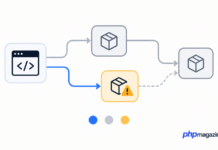
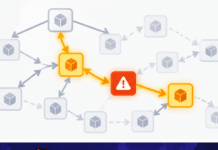
Reachability analysis attempts to provide additional context by identifying paths between application code and vulnerable dependency functions.
How GitHub’s Analysis Works
GitHub uses curated vulnerability information identifying affected functions within packages.
CodeQL then constructs a call graph across the repository and its dependencies, looking for paths from application code to those vulnerable functions.
The analysis runs through a managed GitHub Actions workflow. Developers do not need to maintain a separate analysis runner or install a local tool for the preview.
The resulting evidence appears alongside existing Dependabot alerts.
Importantly, the feature does not automatically close or dismiss vulnerabilities. It adds another signal to the existing security review process.
Understanding the Four Verdicts
GitHub assigns one of four reachability verdicts to analyzed alerts.
- Reachable: The analysis found at least one call path from application code to a vulnerable function.
- Potentially reachable: The analysis could not determine whether the vulnerable function is called. GitHub recommends treating this result as reachable.
- Unreachable: The analysis completed without finding a call path to the vulnerable function.
- Reachability unavailable: The alert could not be analyzed and requires normal security triage.
These verdicts should not be interpreted as absolute guarantees.
Static analysis has limitations involving dynamic language features, reflection, indirect calls, generated code, and runtime behavior that may not be fully represented in the analyzed call graph.
In particular, an Unreachable verdict is not proof that a vulnerability is impossible to exploit.
A Practical Triage Example
Imagine an application with three open dependency alerts.
The first affects a function used by a public request handler. The second affects a package function that is not referenced by application code. The third concerns a dynamically loaded dependency whose execution path cannot be determined.
Reachability analysis could classify the first as Reachable, the second as Unreachable, and the third as Potentially reachable.
That information helps the security team prioritize investigation. However, it does not eliminate the need to consider exploitability, available patches, deployment exposure, and the potential impact of compromise.
A reachable vulnerability in development-only tooling may carry different operational risk from one exposed through a production API.
Availability and Requirements
During the public preview, reachability analysis is available for GitHub Enterprise Cloud, including Enterprise Cloud with data residency.
The initial language support covers JavaScript and TypeScript repositories using npm, Yarn, or pnpm lockfiles.
GitHub-hosted runners are required. Self-hosted runners are not supported for this managed analysis during the preview.
GitHub states that the preview is free, does not require a GitHub Advanced Security license, and does not bill customers for the Actions minutes consumed by the analysis.
There are limitations for some monorepos and repositories containing multiple dependency manifests. Analyses exceeding three hours may produce unavailable verdicts.
The feature is disabled by default. Administrators can enable it through the Dependabot section of repository security settings or through organization and enterprise security configurations.
After the initial scan, analysis runs daily while open Dependabot alerts remain.
What Changes for Security Teams?
The most immediate benefit is better prioritization.
Security teams often spend considerable time investigating alerts that lack sufficient application context. Reachability evidence can help distinguish vulnerabilities requiring immediate investigation from those that may be less urgent.
The verdicts can also be filtered and sorted through GitHub’s alert interfaces and retrieved through the Dependabot alerts REST API.
This creates opportunities for integrating reachability information into existing vulnerability-management workflows.
However, organizations should avoid replacing human review with simplistic automation that automatically ignores every Unreachable result.
Conclusion
GitHub’s reachability analysis is a useful addition to dependency security because it introduces application-specific evidence into a process traditionally dominated by package-level vulnerability information.
Its initial scope is limited, and the feature remains in public preview. Nevertheless, the underlying approach addresses a practical problem: vulnerability management is not simply about counting alerts, but understanding which weaknesses matter most in the context of an actual application.
The strongest security workflow will combine reachability evidence with severity, exploit probability, deployment context, and professional judgment.