











A web application rarely stands alone. It may send email through one service, accept payments through another, store files elsewhere, and use a hosted API to add search or automated features. Each decision can save development time. Each also creates a dependency that somebody will eventually have to manage.
For an agency or product owner, the important question is not whether dependencies are bad. They are often the sensible choice. The question is what happens if a provider changes its pricing, withdraws a feature, no longer meets a client’s needs, or becomes unavailable at the wrong moment.
An exit plan makes that future decision less expensive and less emotional. It does not require building a duplicate of every external service. It requires knowing where the dependency sits, what would have to move, and which trade-offs the business has accepted.
A hypothetical example: the search feature that became essential
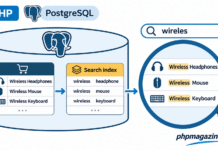
Imagine a small agency building a PHP application for a specialist retailer. The first version uses a hosted search service because the team needs useful search results quickly. The decision is reasonable: the agency can deliver the storefront without building and operating a search platform.
A year later, search influences product discovery across the entire site. Product data is transformed into the provider’s preferred format, application code refers directly to provider-specific fields, and the team’s only documented recovery process is “rebuild the index.” The client now wants to compare alternatives.
Changing the service is possible, but the work includes more than a new subscription. The team must understand data transformations, relevance rules, indexing, failure handling, and the ways staff use search results. None of those concerns makes the original choice wrong. It means the dependency has become a business asset that needs an owner.
Draw the boundary
A useful first step is to describe the capability the application needs in its own terms. A search feature may need to index products and return matching items. An email feature may need to send a transactional message and record whether the provider accepted it. Those descriptions are different from the exact requests and responses of any one vendor.
A small interface or adapter can keep some provider-specific details in one place. That makes the dependency easier to see and gives the team a defined area to examine when a service changes. It does not make all providers interchangeable: their features, delivery guarantees, data models, and operating behavior may differ substantially.
The point is to keep a deliberate boundary between what a provider requires and what the application itself needs to know.
Data portability is only the beginning
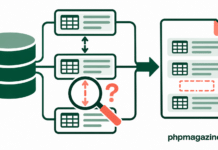
A provider may offer an export, but that does not establish that another service can use the result without additional work. Ask which records can be exported, whether attachments and metadata are included, how long an export takes, and whether the data remains understandable outside the original platform.
Then look at behavior. Search ranking rules, email templates, moderation settings, user permissions, and automation workflows may be just as important as the stored data. A team that can export a list of customers but cannot reconstruct the process surrounding those customers has only solved part of the problem.
Testing matters too. Before a switch, define a representative set of tasks: find a known product, send a confirmation, restore a file, or process a sample transaction in a safe environment. These checks help compare outcomes without assuming that two products behave identically.
Calculate the cost of leaving before you need to leave
Consider the direct cost of a replacement alongside engineering time, temporary parallel operation, staff training, data transfer, validation, and possible disruption. A lower monthly fee does not automatically make switching worthwhile. Equally, a low introductory price does not reveal the full work of moving.
Review contractual and commercial constraints with the person responsible for purchasing. Notice periods, minimum commitments, export access, support arrangements, and responsibilities during termination can all affect the timetable. The exact terms depend on the agreement; assumptions should be checked before a deadline is approaching.
A practical record can be brief: name the dependency and its owner, identify what data and workflows it holds, link to the relevant agreement, describe the export procedure, and record the last time the exit assumptions were reviewed. If an important step has never been tested, say so.
Portability has a price too
An agency can spend too much time preparing for an unlikely switch. A generic abstraction may hide useful features or create a maintenance burden of its own. Running two providers indefinitely can double operational work. Some capabilities are so specialized that using them directly is the best business decision.
Match the investment to the consequence of being stuck. A replaceable analytics widget may need little more than a record of its purpose and account owner. A service holding essential business data or supporting a revenue-critical workflow deserves deeper attention. A short proof of export, a documented fallback, or a limited migration exercise may provide enough confidence without building a full alternative.
Make the decision visible
In the retailer example, the agency might recommend keeping the existing search service while isolating the indexing logic and documenting how product data can be rebuilt. The client may accept a provider-specific ranking feature because it solves a valuable problem, while recognizing that replacing it later will require extra work.
That is a sounder conversation than promising the system is “vendor-neutral.” No application is free of dependencies. A resilient business knows which dependencies matter, why they were chosen, and what it would take to change direction.