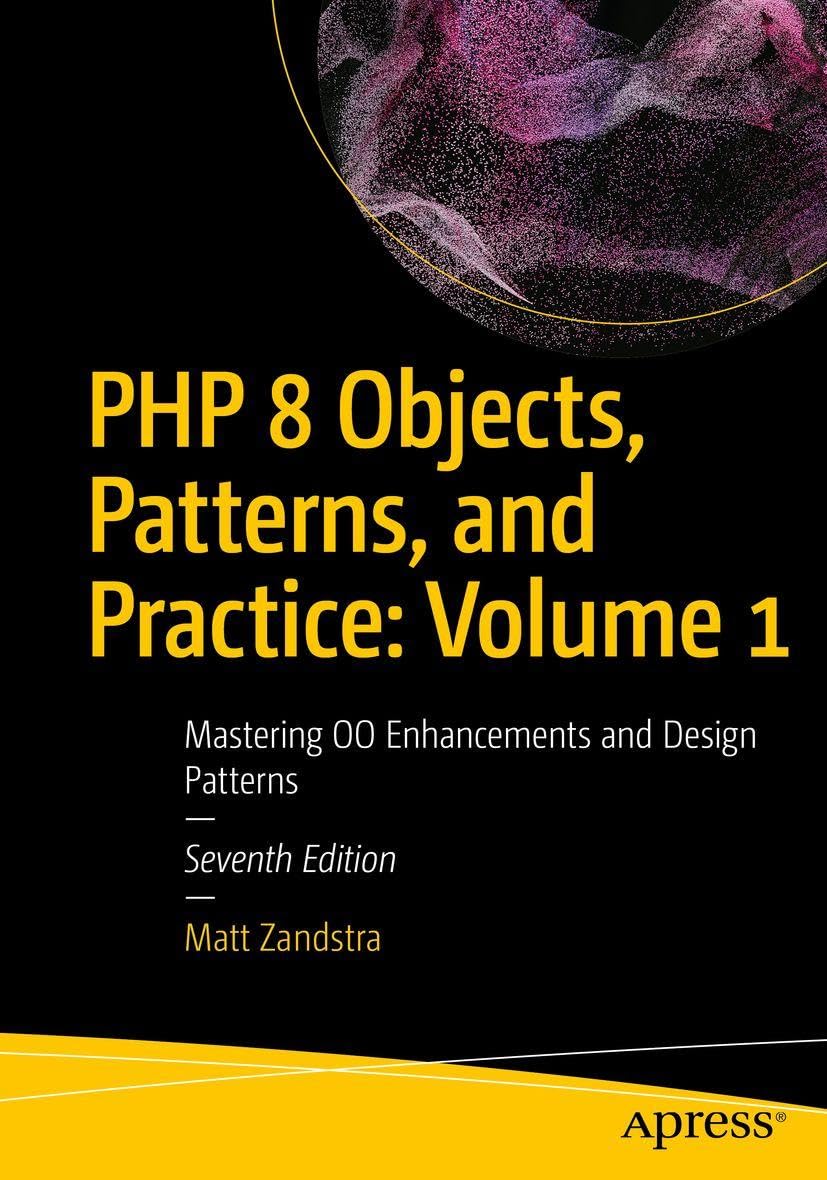
Object-oriented programming has been part of PHP for decades, yet writing classes is not the same as designing maintainable software. A developer can understand inheritance, interfaces, and dependency injection while still struggling to decide how those concepts should fit together in a real application.
Matt Zandstra’s PHP 8 Objects, Patterns, and Practice: Volume 1: Mastering OO Enhancements and Design Patterns addresses precisely that gap. Published by Apress in December 2024, this seventh edition updates a long-running reference for PHP 8.3 and divides the material into two volumes.
Volume 1 concentrates on object-oriented programming and design patterns. Volume 2 addresses development tools and broader practices. That distinction matters: readers purchasing the first volume should not expect a complete treatment of every modern PHP development workflow.
For longtime PHP Magazine readers, this title may sound familiar. More than 20 years ago, back in 2005, we briefly covered an earlier edition of PHP Objects, Patterns, and Practice. Two decades later, the book is still alive, still evolving, and still relevant to the PHP community. Its seventh edition is more than a nostalgic return: it reflects how both PHP and the discipline of software design have matured over the years. Few programming books manage to remain in circulation across so many generations of a language, and that longevity alone makes this edition worth revisiting.
From PHP Classes to Software Design
The first part of the book establishes the language foundations required for object-oriented design. Its chapters move from PHP’s object model and class fundamentals to advanced features, object-related tools, and design considerations.
The publisher identifies modern features including readonly classes, enumerations, and typed class constants. These are useful additions because PHP’s object model has evolved significantly since the earlier editions of this title.
For developers returning to PHP after several years, this section may be particularly valuable. It connects familiar object-oriented ideas with language capabilities available in contemporary PHP versions.
Experienced developers who already use these features daily may find some of the foundational material unnecessary. The book is not intended to be a compact reference containing only advanced language changes.
The Design Patterns Section Is the Main Attraction
The second part moves beyond language syntax to explore why design patterns exist and how they can help organize software.
The table of contents begins with pattern principles before examining object creation, flexible object programming, and the representation of tasks.
It then extends into enterprise and database patterns, subjects that distinguish this book from shorter introductions concentrating exclusively on the classic Gang of Four catalog.
This broader coverage is especially relevant to PHP developers working on business applications, where persistence, application boundaries, and responsibilities between components often create more difficult problems than individual algorithms.
One important distinction should be made: learning a pattern does not mean applying it everywhere. The value of a design-pattern book depends partly on helping developers recognize when an abstraction solves a real problem and when a simpler implementation is preferable.
What Makes This Edition Relevant?
The book’s strongest proposition is the combination of modern PHP language features with established software design principles.
Many design-pattern explanations are language-neutral or based on Java and C++. Those resources remain useful, but translating their examples into idiomatic PHP can require additional work.
Zandstra’s book approaches the subject from within the PHP ecosystem, making it a more directly relevant reference for developers who want to apply object-oriented design in PHP applications.
The seventh edition’s coverage of PHP 8.3 also makes it considerably more current than older PHP object-oriented programming books. However, readers should not assume it covers features introduced in PHP 8.4 or PHP 8.5 after the book’s publication.
Where the Book Has Limitations
Its scope is substantial, and that creates two purchasing considerations.
First, the book expects at least a basic understanding of PHP. Readers who have never written a PHP application should begin with an introductory resource before tackling architectural patterns.
Second, this edition separates objects and patterns from development tools and practices. Readers seeking a comprehensive guide to testing, deployment, and the broader development workflow should inspect Volume 2 rather than assume those subjects are fully addressed here.
There is also the question of practical depth. The publisher provides a detailed chapter outline and access to source-code resources, but those materials alone cannot establish how effectively every example explains its tradeoffs or how well the exercises work across different environments.
Our assessment is therefore based on the verified contents, publisher information, and available preview material. It should not be mistaken for a report of having executed every example or read the complete book.
Who Should Buy It?
This book is a strong candidate for intermediate PHP developers who are comfortable writing application code but want a more systematic understanding of object-oriented architecture.
It may also appeal to senior developers who want a PHP-specific reference when mentoring colleagues or reviewing architectural decisions.
For developers interested in the PHP Design Patterns Game series, the book offers a broader theoretical foundation that complements practical pattern exercises.
Beginners looking for their first PHP book should consider a more introductory guide. Developers interested exclusively in the newest language releases may prefer the official PHP documentation and targeted technical resources.
The Verdict: A Serious Reference for PHP Developers
PHP 8 Objects, Patterns, and Practice: Volume 1 remains an appealing proposition: a substantial PHP-focused treatment of object-oriented design, supported by a long-established technical title and updated for PHP 8.3.
Its main advantage is not simply the number of patterns it covers, but the progression from language capabilities to architectural reasoning, including enterprise and database patterns.
Our provisional editorial rating is 4 out of 5 stars. It is a promising purchase for developers who want to improve their software design skills, provided they understand the division between the two volumes and the edition’s PHP version coverage.
Before purchasing, compare the official table of contents with your current knowledge and verify the price and available formats for your region.
Buy PHP 8 Objects, Patterns, and Practice: Volume 1: Mastering OO Enhancements and Design Patterns From Amazon