A client pays the final invoice, the project launches, and the agency records the engagement as a success. But a month later, the owner notices that cash is tighter than expected. The project brought in revenue; it is less clear how much it contributed after the work was paid for.
Project margin is a useful starting point for answering that question. It compares revenue with the direct costs of delivering the project. It does not replace a complete view of business profitability, but it can reveal where estimates and delivery habits need attention.
Begin with a consistent definition
For a simple project-level view, subtract direct delivery costs from project revenue. Divide the result by revenue to express the margin as a percentage. Decide in advance which costs belong in that calculation and apply the same approach across comparable projects.
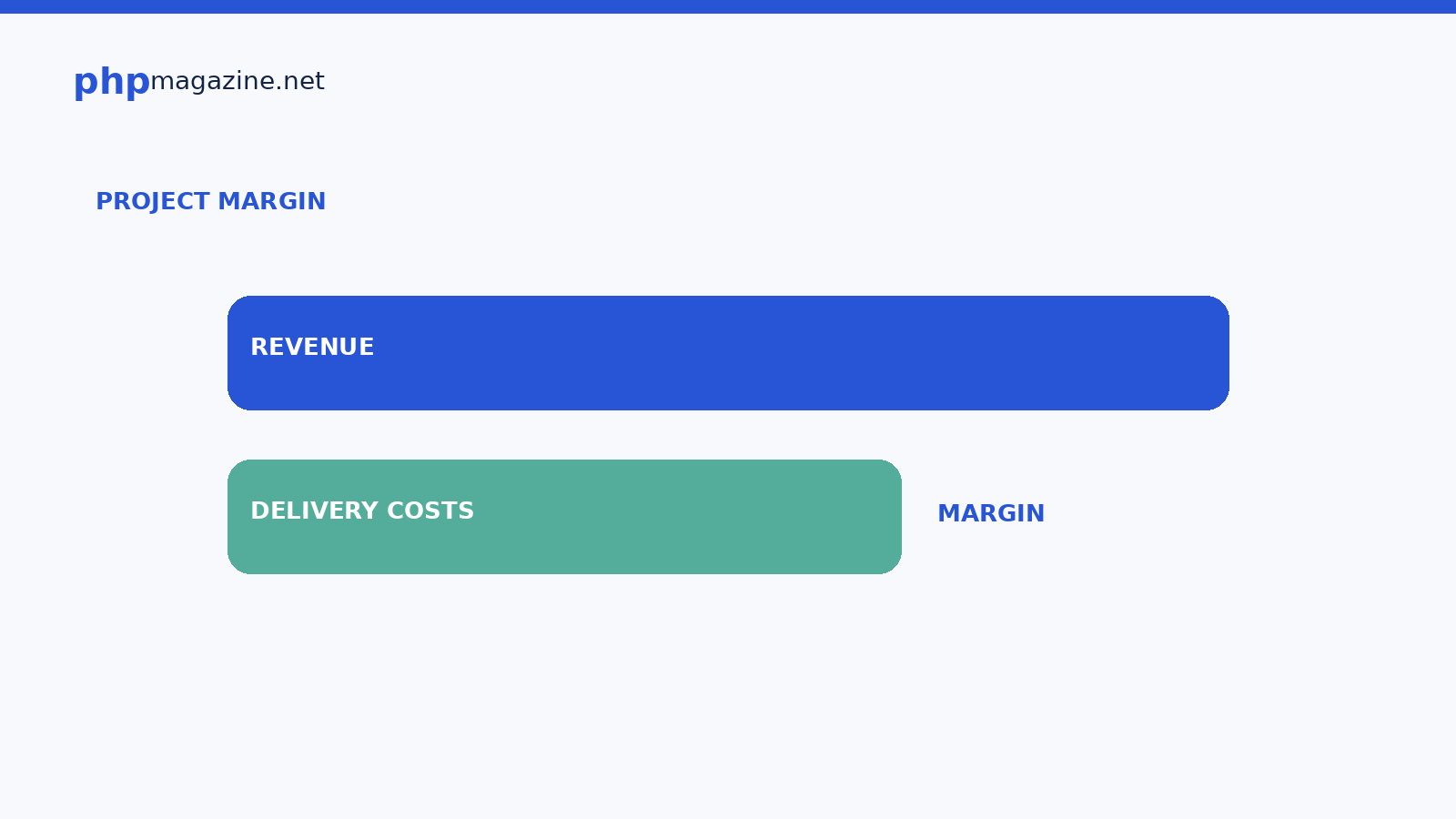
Consider an illustrative project with $20,000 in revenue and $12,000 in direct delivery costs. The contribution before other business expenses is $8,000: a project margin of 40%. That does not mean the agency has made $8,000 in final profit. Rent, sales, administration, insurance, taxes, and other costs still need to be covered.
Count the work that made delivery possible
Direct costs may include employees’ delivery time, contractors, project-specific software, and other expenses attributable to the engagement. The exact classification depends on the agency’s accounting method. What matters operationally is that estimates and reviews use a consistent definition.
Do not overlook project management, testing, client meetings, deployment, and post-launch corrections. If those hours are excluded from the project review, a technically efficient build can appear more profitable than the full engagement actually was.
For employee time, an internal cost rate may need to account for compensation and employer costs—not merely the person’s salary divided by working hours. Work with your financial adviser or accountant to choose a method appropriate to your business.
Compare the estimate with the actual work
A margin review is most useful when it explains a difference. Compare the original estimate with actual hours and costs by activity. Perhaps implementation stayed close to plan, but content revisions doubled the expected coordination time. Perhaps a third-party integration required investigation that was not identified during discovery.
Separate one-off events from recurring patterns. A unique incident may call for a contingency discussion. Repeatedly underestimated testing, stakeholder feedback, or deployment work suggests that the estimating process itself needs to change.
Look beyond one percentage
A high project margin does not automatically make a client relationship healthy. Late payments, unpredictable support demands, and dependence on a single key employee can create other risks. Likewise, a lower-margin engagement may be a deliberate investment in a new capability or a long-term relationship.
The important distinction is whether that trade-off was intentional. Review margin alongside payment timing, team workload, client expectations, and the likelihood of follow-on work. Do not treat possible future revenue as if it were already contracted.
Use the review to change the next decision
After each project, document two or three concrete lessons. An agency might add an integration assessment before quoting, introduce a clearer approval process, or allocate more time for quality assurance. The goal is not to identify who caused an overrun; it is to improve the assumptions behind the next proposal.
Revenue tells you that the work was sold. A consistent margin review helps you understand what it took to deliver—and whether the business can afford to keep delivering it.