










A client asks a web agency a reasonable question: if AI can generate code faster, why should a project cost the same? The answer depends on what is being delivered, how the work is priced, and how much effort remains after a first draft exists.
AI-assisted tools can help with tasks such as drafting code, exploring an unfamiliar API, or preparing test cases. Their usefulness varies by task and team. A proposal should account for the actual workflow rather than assuming either automatic savings or a fixed amount of extra work.
Separate the first draft from the finished service
A generated component may still need review, integration, testing, accessibility work, deployment, and maintenance. It may introduce an approach that looks plausible but conflicts with the application’s existing architecture. The agency remains responsible for evaluating whether the result meets the agreed requirements.
That work has value, but it should not become a vague justification for an unchanged estimate. Estimate the activities the team expects to perform and update that estimate as experience improves. If a tool consistently reduces effort on a particular type of task, the agency should understand where the saving occurs and how it affects the offer.
Match the pricing model to the engagement
With time-and-materials pricing, the client generally pays for the agreed time spent. Faster completion can reduce the invoice, assuming the scope and rate remain the same. The agency should record review and integration work accurately rather than treating generated output as finished work.
With a fixed-price project, the client buys an agreed scope for an agreed price. The agency takes on more delivery risk and may benefit from working efficiently. The price should still be defensible against the scope, quality expectations, responsibilities, and alternatives available to the client.
For repeatable services, a productised price can work when the deliverables and limits are clear. For example, an agency might offer an accessibility review with a defined report and follow-up session. AI assistance may change the internal workflow, but the client needs to understand what is reviewed and what the report does—and does not—cover.
Budget for verification
Consider a hypothetical feature estimated at 30 hours: 12 for implementation, eight for review and testing, six for integration, and four for coordination. If AI assistance reduces implementation to seven hours but adds two hours of review, the revised estimate becomes 27 hours, assuming the other activities stay the same.
This example is arithmetic, not a claim about typical productivity. In another project, review may take less time, more time, or reveal that the generated approach should be discarded. Track the work by activity across comparable projects before using assumed savings in future proposals.
Discuss the workflow with the client
Client expectations differ. Some welcome AI-assisted work; others have requirements about where code, documents, or sensitive information may be processed. Discuss relevant constraints before using tools with client material, and check the applicable contracts and tool settings.
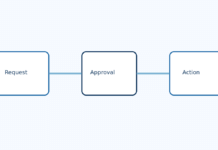
The conversation can be straightforward: explain which activities may be assisted, how outputs are reviewed, what information can be shared with external services, and who approves the result. Do not promise that every defect can be detected, whether code is written by a person or produced with assistance.
Use experience to refine the offer
After delivery, compare the estimate with actual time and quality issues. Did the team save time on a repetitive task? Did integration take longer? Were reviewers comfortable maintaining the result? These observations can improve both pricing and delivery practices.
Clients ultimately need software that meets their requirements and can be operated responsibly. An agency’s pricing should make that service understandable while leaving room to share the benefits of a more efficient process.