






An open-source project can be essential to its users and exhausting for its maintainers. Bug reports, security updates, compatibility work, documentation, and community support continue whether or not anyone has paid for the time involved.
A donation button can give grateful users a way to contribute, but it is only one possible source of funding. For a PHP library, developer tool, or web application, a sustainable plan begins by understanding the work that needs funding and the people or organisations that depend on it.
Start with the maintenance bill
Before choosing a funding model, list the recurring work: reviewing contributions, reproducing bugs, preparing releases, responding to security reports, updating documentation, and maintaining infrastructure. Estimate the time and external expenses involved over a representative period.
This does not need to be a perfect budget. A rough, regularly updated picture is enough to answer useful questions: how much maintainer time is currently unpaid, which tasks could be shared, and what funding would make a meaningful difference?
Understand who benefits
Individual developers and organisations may value the same project differently. A developer might appreciate a useful library; a company may depend on it in a production application. The company’s concern may be continuity, predictable maintenance, or access to expertise rather than a new feature.
Talk to users and contributors where practical. Ask how they use the project, what would happen if it stopped being maintained, and which outcomes matter to them. Avoid assuming that every user has a budget or that every company can purchase the same type of service.
Compare funding options
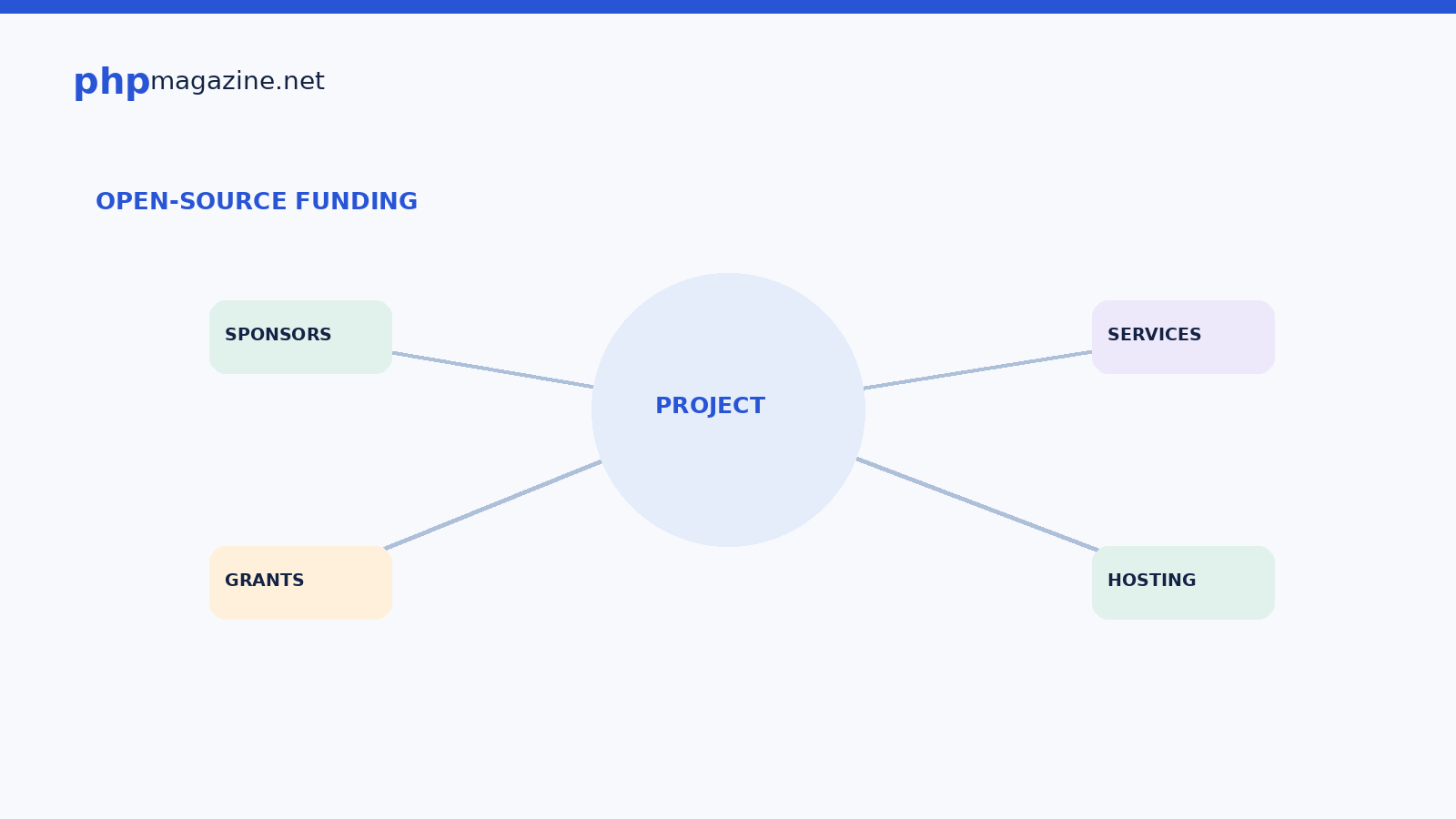
Recurring sponsorship can support general maintenance, particularly when contributors understand what their support enables. Grants can fund defined work but often require applications, reporting, and a plan for what happens after the grant ends.
Professional services can fund expertise around the project: training, integration, migration, or advisory work. A hosted offering may suit a project whose users would rather pay for operation and support than manage the software themselves. Each option creates obligations, so the work required to deliver it belongs in the budget.
A mix may reduce dependence on one source, but too many offers can overwhelm a small team. Start with one or two approaches that match the project and the maintainers’ capacity. A popular library does not automatically need a hosted platform, and a hosted product is not appropriate for every community.
Set boundaries sponsors can understand
Funding conversations become difficult when expectations are implicit. Explain whether sponsorship supports the project generally or purchases a specific service. If a sponsor needs response commitments, a private support channel, or guaranteed work, those may require a separate agreement with clearly defined terms.
Be transparent about how priorities are decided. A sponsor may reasonably ask for a feature, but maintainers should explain whether funding changes the public roadmap, who reviews the work, and what commitments the project can sustain. Clear boundaries protect both the sponsor relationship and the wider community.
Reduce the cost of depending on one person
Money can buy time, but a project also needs ways to share responsibility. Document the release process, identify who can access essential infrastructure, and make it easier for trusted contributors to review issues and changes. A funding plan that covers only one maintainer’s immediate workload may still leave a serious continuity risk.
Review the plan periodically. Are funds covering maintenance or creating additional obligations? Is one customer becoming too important to lose? Do contributors understand how decisions are made? The answers can guide a gradual change in the funding mix.
Open-source sustainability is a practical business question as well as a community question. The strongest plan is one that makes essential work visible, matches funding to real value, and gives maintainers enough room to continue the work responsibly.