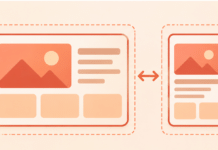
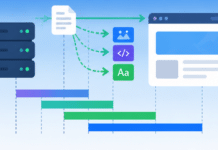
Positioning interface elements relative to other elements has long been a source of complexity in front-end development.
Tooltips, floating menus, contextual information panels, and dropdowns often require developers to calculate coordinates, handle viewport boundaries, and update positioning when the page changes.
JavaScript positioning libraries have provided reliable solutions to these problems, but modern CSS now includes native anchor-positioning capabilities that can handle many common scenarios directly in the browser.
Chrome DevTools has introduced a visual editor for the CSS position-area property, making this relatively new layout mechanism easier to inspect and understand. The improvement is documented in Google’s October 2026 DevTools updates, covering features delivered with Chrome 155 and Chrome 156.
The new editor does not introduce another CSS specification. Instead, it provides a more accessible way to work with existing anchor-positioning features.
The Problem with Floating Interface Elements
Consider a button that displays a contextual panel directly below it.
A traditional implementation might place the button and panel inside a relatively positioned container, then position the panel absolutely using top and left offsets.
This can work for simple layouts, but it becomes more difficult when the positioned element belongs to another part of the DOM, when the layout changes, or when the panel must avoid overflowing the viewport.
CSS anchor positioning introduces a more declarative relationship between the element acting as an anchor and the element positioned relative to it.
Rather than calculating coordinates manually, developers can describe the intended relationship directly in CSS.
Understanding anchor-name and position-anchor
Anchor positioning begins by assigning an anchor name to a reference element.
For example:
.menu-button {
    anchor-name: --menu-anchor;
}
A positioned element can then associate itself with this anchor:
.menu-panel {
    position: absolute;
    position-anchor: --menu-anchor;
    position-area: bottom center;
}
The position-anchor property establishes the relationship. The position-area property determines where the positioned element should appear relative to the anchor.
In this example, the panel is placed below the anchor and centered relative to it.
A Practical Example with a Native Popover
We can combine CSS anchor positioning with the HTML Popover API to create a basic contextual panel.
The HTML defines a button and a panel whose visibility is controlled by the browser:
<button
    class="menu-button"
    popovertarget="details-panel"
>
    View details
</button>

<div
    id="details-panel"
    class="menu-panel"
    popover
>
    <strong>Release details</strong>
    <p>
        Information about this release.
    </p>
</div>
The button’s popovertarget attribute connects it to the panel. The browser handles showing and hiding the popover without requiring a custom JavaScript click handler.
We can then provide a basic fallback and enhance the positioning in browsers supporting the CSS anchor-positioning property:
.menu-panel {
    position: fixed;
    inset: auto;
    top: 25%;
    left: 50%;
    transform: translateX(-50%);
    margin: 0;
    padding: 1rem;
    border: 1px solid #d6dce6;
    border-radius: 0.75rem;
    background: white;
    box-shadow: 0 8px 24px rgb(0 0 0 / 0.12);
}

@supports (position-area: bottom center) {
    .menu-button {
        anchor-name: --menu-anchor;
    }

    .menu-panel {
        position: absolute;
        position-anchor: --menu-anchor;
        position-area: bottom center;
        inset: auto;
        transform: none;
        margin-block-start: 0.5rem;
    }
}
In browsers supporting anchor positioning, the panel is placed relative to the button. In older browsers that support popovers but not position-area, it remains visible in a fixed fallback location.
This is intentionally a simplified example. Production interfaces should also account for responsive layouts, focus management, content dimensions, and placement when the available screen space is limited.
How the New DevTools Editor Works
The visual editor makes it easier to understand the position-area grid used by CSS anchor positioning.
When inspecting an anchor-positioned element in Chrome DevTools, open the Elements panel and locate its position-area declaration in the Styles pane.
Chrome now displays an inline swatch beside that declaration. Selecting it opens an interactive grid representing the placement areas around the anchor.
Developers can select different grid regions, adjust horizontal and vertical placement, and inspect how the chosen value affects the page.
The editor also supports controls related to the self keyword and logical positioning, reducing the need to memorize every combination of position-area values.
This is particularly useful when exploring layouts visually before committing the final CSS to a stylesheet.
Why the Three-by-Three Grid Matters
The position-area property conceptually divides the space around an anchor into a three-by-three grid.
The anchor occupies the central reference region. Other grid areas represent positions above, below, beside, or aligned with the anchor.
For example, developers can experiment with values that place a panel above or below a control, or align it with an appropriate side.
Visualizing these regions helps explain behavior that may otherwise seem obscure when reading CSS declarations alone.
It also makes the difference between an anchor relationship and an ordinary containing-block relationship easier to understand.
Handling Viewport Boundaries
One challenge remains: a panel positioned below a button may extend beyond the viewport when the button is near the bottom of the screen.
CSS anchor positioning provides additional features, including position-try, that allow developers to define alternative placement strategies.
These capabilities are distinct from the DevTools visual editor itself. The editor helps configure and inspect placement, while the CSS rules determine how the browser behaves at runtime.
For complex interfaces, developers should test scrolling, zoom levels, text resizing, writing directions, and narrow viewports rather than assuming a single position-area value is sufficient.
Do We Still Need JavaScript Positioning Libraries?
Native anchor positioning reduces the need for JavaScript in many common interface patterns, but it does not make every positioning library obsolete.
Existing libraries may include sophisticated collision detection, interaction management, accessibility patterns, and behavior that must support older browsers.
Organizations already using a reliable positioning library should evaluate the cost of replacing it rather than assuming native CSS will always provide a simpler solution.
For new interfaces targeting current browsers, however, native CSS and the Popover API deserve consideration before introducing another JavaScript dependency.
Conclusion
Chrome DevTools’ visual position-area editor is a useful improvement because it makes a powerful CSS feature more approachable.
Anchor positioning can simplify floating interface elements, while the new visual controls reduce the effort required to experiment with placement values.
The practical opportunity is not to eliminate JavaScript at all costs. It is to recognize where modern CSS now provides a sufficiently expressive and maintainable solution.
For front-end developers working with current browsers, the new DevTools editor offers a convenient starting point for exploring those possibilities.